Why Your Avocados Stay Rock Hard: 7 Common Ripening Mistakes
Few kitchen disappointments are as dependable as the avocado you've been saving. You bought it hard on Monday, gave it a good spot on the worktop, and by Friday it's still the same green brick. Then, two days later, it swings from unripe to brown mush with nothing in between.
There's usually a reason. Ripening is a chemical process, and small things — where you keep it, what is sitting next to it, how often you prod it — either move it along or stall it completely. Here are the seven mistakes we see most often, and what to do instead.
1. You put them straight in the fridge
This is the single most common reason a hard avocado stays hard. Ripening is driven by enzymes inside the fruit, and cold slows those enzymes almost to a stop. Below roughly 8°C, a rock-hard avocado will sit there for a week or more, changing hardly at all. Wrap it in a bag for extra protection and the effect is even stronger.
The fridge is an excellent place for a ripe avocado — it will hold a soft one for two or three days. It is the wrong place for a hard one. If you have already chilled it, don't panic. Take it out, let it come back to room temperature and it should carry on ripening, though often a little unevenly. Eat it sooner rather than later.
2. They're ripening alone with nothing to help them
Avocados release ethylene gas as they soften, and ethylene encourages ripening in whatever is nearby. A hard avocado produces very little of it, so a bowl of five hard avocados is a bowl of five fruits doing almost nothing. Give them a partner:
- a ripe banana, the spottier the better
- a ripe apple or pear
- a ripe tomato that needs eating up
- another avocado that has already gone soft
This cuts both ways. Once an avocado is ready, move it away from the ripe fruit, or you will find the entire bowl ready on the same afternoon and no plan for using them.
3. You're checking ripeness by squeezing
Thumb pressure tells you very little and does real damage. You bruise a patch of flesh that softens before the rest of the fruit, then turns grey and stringy. The avocado feels ready in one spot and stays firm an inch away.
Press gently with your whole palm instead. Better still, use the stem test: the small cap at the top of the fruit. If it flicks off easily and the flesh underneath is pale green, you're close. If it resists, leave it alone. If it's brown underneath, it's past its best — that one becomes guacamole immediately.
4. You're judging by colour alone
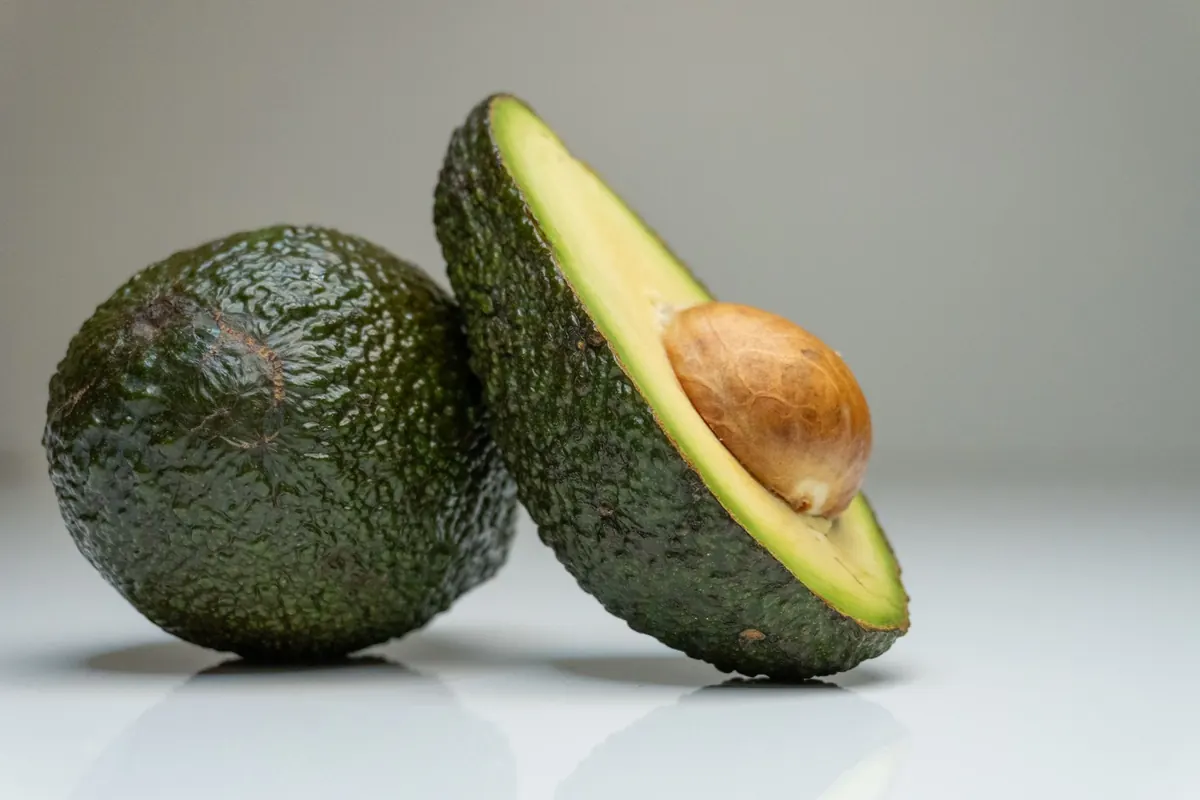
Hass avocados darken as they ripen, so skin colour is a rough guide at best. Some go nearly black while still firm in the middle. Others sit at a dark green that never quite turns, yet eat beautifully. Fuerte, Bacon and Reed avocados stay green even when perfectly ripe, which is why shoppers who trust colour alone end up cutting into hard fruit again and again.
Treat colour as a hint and texture as the evidence. Gentle palm pressure near the stem end, or the stem cap itself, will tell you far more.
5. You're using a plastic bag, or no bag at all
A paper bag is the right tool. It traps the ethylene the fruit is producing, which speeds things up, while letting excess moisture escape. Leave the top loosely folded rather than sealed tight.
A plastic bag, or a sealed tub, does the opposite. Moisture collects, mould appears around the stem, and you get soft patches next to hard ones. If a plastic bag is all you have, leave it wide open. And an avocado left bare on the worktop is simply ripening at the slowest possible speed.
6. They're sitting in a cold spot
Room temperature matters more than most people realise. Somewhere around 18–22°C is ideal. A stone worktop, a windowsill that drops cold overnight, or a draughty corner by a back door can all lengthen the wait considerably.
A better spot is the top of the fridge, a shelf in an airing cupboard, or the counter beside the kettle — somewhere consistently mild. What you want to avoid is heat. Push an avocado much above the mid-twenties and it ripens badly: soft at the edges, stubborn in the core, with a flat flavour. Direct sun is worse still. And no, the microwave and the oven do not ripen avocados. They cook them.
7. You cut into it too early
Once an avocado is halved, ripening effectively stops. The exposed flesh darkens, dries and will not soften properly no matter how long you wait. A hard half stays rubbery and slightly bitter, which is how a promising lunch turns into a disappointment.
If you've already cut one and found it firm, don't try to rescue it by leaving it out. Slice it as thinly as you can, dress it with lime, salt and a little oil, and treat it as a crunchy element in a salad or slaw. Roasting the halves with olive oil and seasoning also works surprisingly well. Then start again tomorrow with a fruit you haven't opened.
A routine that actually works
Ripening avocados is less about patience than about conditions. Set them up properly and most of the waiting takes care of itself:
- Buy firm avocados and leave them on the worktop at room temperature. No fridge, not yet.
- For speed, drop them into a paper bag with a ripe banana or apple, loosely closed, and check daily.
- Test with the stem cap or light palm pressure rather than squeezing.
- The moment one gives slightly, move it to the fridge and use it within two or three days.
- Buy them at different stages — one ripe, two firm — so you always have one ready without a pile-up.
If you need an avocado in the next hour, buy one sold as ready to eat. There is no reliable shortcut for a hard one, and every method that claims otherwise ends with warm, damaged fruit. Ripen them well and the timing looks after itself.
Photo: Ivan Vi / Pexels